
OnlyFans Watchlist: How to Track Spending Across Pages
Tracking spending on OnlyFans is harder than it should be, because the platform was never designed to show you a tidy monthly total. Free pages look costless until a tip here and an unlock there start adding up, and there is no built-in discovery feed to help you compare what you follow.
A watchlist is not a budgeting app and it does not connect to your account. It is a manual log you control, and that is exactly why it works.
If you have ever opened your bank statement and struggled to match a charge to a specific page, the watchlist closes that gap. It also gives you something most subscribers never have: a written record of what you expected to pay versus what you actually paid.
What a subscriber watchlist actually tracks
Every page you follow gets one row, and that row holds four core columns. The first is the date you followed the page, which tells you how long a quiet spell has actually lasted.
The third column is unlocks so far, a running count of pay-per-view purchases tied to that page. The fourth is the last activity check, the date you last looked at the page and confirmed its current state.
Beyond the core four, some signals are worth logging because they predict spending better than a price tag does. Add them as extra columns only if you will actually fill them in.
- How often the page sends pay-per-view messages in a typical week
- Whether tips are prompted inside messages or left optional
- Any temporary promotion that lowered the first month’s price
- The date the subscription renews, so a price change does not surprise you
- Whether you have ever regretted an unlock on that page
Keep the columns narrow. A watchlist that needs horizontal scrolling on a phone will not survive past the second week.
Why free pages still cost money
A free page means the subscription price is set to $0, and the creator earns through pay-per-view messages and tips instead. That structure removes the monthly commitment but replaces it with something less predictable.
Paid pages, by contrast, have a visible anchor. The platform range runs from $4.99 at the minimum to $49.99 at the maximum, with most paid pages sitting between $4.99 and $15 and averages landing around $5 to $10.
That anchor matters because you can compare a free page’s monthly total against the $5-to-$10 average and see immediately whether following it for free is actually cheaper. Sometimes it is.
| Page | Quiet month | Busy month |
| Page A (free) | Two unlocks, no tips | Nine unlocks and three tips |
| Page B (free) | One tip, no unlocks | Six unlocks and regular tips |
| Page C ($4.99 paid) | Subscription only | Subscription plus four unlocks |
The quiet month looks harmless on all three rows. The busy month shows why the subscription price alone tells you very little about what a page costs you over time.
A practical tip: log every unlock the same day it happens. Reconstructing a month from memory at the end of it is where most watchlists fall apart, and the numbers you cannot remember are usually the ones worth seeing.
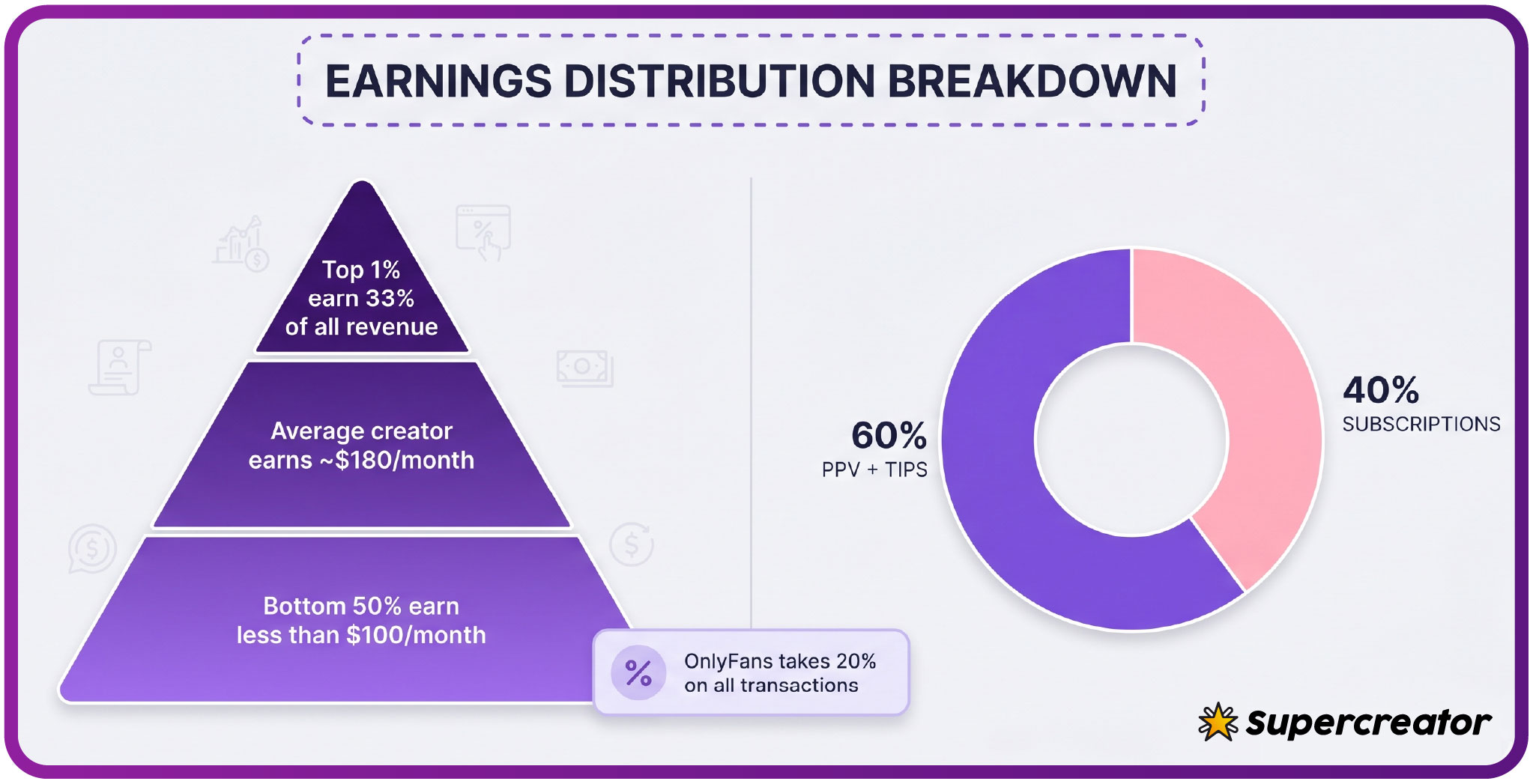
Platform economics also shape what creators offer. The platform takes a 20% fee on subscriptions, tips, and pay-per-view, and the creator keeps 80%.

Setting up your watchlist in ten minutes
A notes app, a spreadsheet, or a plain table in any document all work. The format matters less than starting today with the pages you already follow.
List every page you currently follow, including the ones you think are free and harmless. Those are often the rows that produce the most useful surprises at the first review.
- Create one header row with your chosen columns
- Add one row per page you follow
- Enter the follow date, using today’s date if the real one is unknown
- Enter the promised price, writing “free” where the price is set to $0
- Enter unlocks so far as a number, starting at zero if unsure
- Set the last activity check to today
- Note the renewal date for any paid page
- Leave a short free-text column for anything unusual
Total time for twenty pages is under ten minutes if you stop second-guessing entries. Precision improves with each weekly review, so an imperfect first draft is better than a perfect one you never build.
The weekly five-minute review
Once a week, open the watchlist and scan it top to bottom without changing anything. Update unlocks for any page you interacted with, then set the last activity check to today for pages you actually looked at.
Flag any row that surprised you. A surprise is usually one of three things: an unlock you had forgotten, a message volume higher than expected, or a page you thought you had stopped engaging with.
| Day | Action taken | Pages updated |
| Monday | Logged two unlocks | Page A, Page C |
| Wednesday | Logged one tip | Page B |
| Friday | Checked message volume | All three |
| Sunday | Weekly scan and flags | All three |
At the end of the scan, decide what to keep. Keeping a page means you expect to engage with it next week, not that you feel bad about removing it. If you cannot say why a row exists, that row has answered its own question. For a starting point, free onlyfans brazil accounts collects free pages.
Ranking sites exist precisely because OnlyFans has no built-in discovery feed or directory. The same absence of a spending summary is why a personal watchlist is worth the small weekly effort. BestOnlyFans and similar directories solve the finding problem; your watchlist solves the tracking problem.
Spotting drift before it becomes a habit
Drift is the pattern where unlocks stop feeling like decisions and start feeling like defaults. It rarely announces itself, and it usually appears on pages you would describe as your least expensive.
Three consecutive weeks of “just one more” on the same page is a clearer signal than a single large purchase. The total is not the point; the automatic quality of the decision is.
- Unlock counts rising while your interest in the page stays flat
- Opening a page only because a message arrived, not because you chose to
- Losing track of how many unlocks happened this month
- Feeling mild surprise at the weekly total
- Skipping the review because you already suspect the answer
When you find drift, the fix is not a rule against unlocking. It is putting the page on a short observation period where you log before you buy, not after. Most drift patterns break within two weeks of becoming visible.
When to remove a page from the watchlist
Removing a page is a normal part of keeping the list useful, not a failure. The criteria are simple: you have not engaged with it in a month, the unlocks you do make feel automatic, or the page’s current price no longer matches what you originally signed up for. Any one of those is enough.
For paid pages, note that raising the subscription price stops auto-renew, and existing access lasts until the current paid period ends. That means a price change gives you a natural decision point instead of forcing an immediate choice. Record the reason for removal in your notes so you do not re-add the same page in a month and repeat the cycle.
- Removing a page without writing down why
- Deleting the row instead of archiving it
- Re-adding a page during a promotion and forgetting the old reason
- Keeping a page only because the follow date is old
- Treating a pause as a permanent decision
For paid pages, a pause is often better than removal. Stop the renewal and keep the row with a note, then reassess when the current period ends. For free pages, removal costs nothing except the record, which is why archiving beats deleting.
Adjusting the watchlist as pages change
Pages change, and a watchlist that never changes stops reflecting reality. A price shift, a quiet stretch, or a new pay-per-view habit all deserve a mid-month edit rather than waiting for the next scheduled review. The edit takes seconds and prevents a stale row from misleading you later.
If a paid page moves outside the $4.99-to-$15 typical band, update the promised price column the day you notice. If a free page starts sending far more pay-per-view messages than before, that is a habit change worth recording even if you have not spent anything yet.
- A subscription price change on a paid page
- Three or more weeks with no activity on a page
- A clear increase in pay-per-view message frequency
- A promotional first month ending and the standard price resuming
- An auto-renew stopping after a price increase
BestOnlyFans-style directories help you find new pages; the watchlist is what stops the list from growing faster than your ability to review it. A page can be genuinely good and still not belong on your list. Those are different questions, and the watchlist keeps them separate.
One final note on expectations: the point is a visible, reviewable number, not a perfect one. A rough total you actually look at beats an exact total you never update. BestOnlyFans readers who keep the routine simple tend to keep it running, and a watchlist that survives is the only kind that helps.
FAQ
Do free pages ever charge automatically?
No. A free page has the subscription price set to $0, so nothing is charged on a schedule, and any spending comes from pay-per-view unlocks or tips you choose to send.
What is the lowest possible subscription price?
The minimum paid subscription is $4.99, and there is no base price below that, though a promotional first month can occasionally dip under it.
Does raising a price cancel my access immediately?
No. When a creator raises the subscription price, auto-renew stops, but existing access continues until the current paid period ends.
How much of each payment reaches the creator?
The platform fee is 20% on subscriptions, tips, and pay-per-view, so the creator keeps 80% of everything paid.
Compare your own monthly total against the typical paid range of $4.99 to $15, and you will know within one review cycle whether your free pages are actually saving you money on free onlyfans brazil accounts or quietly costing more than a subscription would.