
OnlyFans Notifications: How They Push Spending Up
OnlyFans notifications are easy to ignore as background noise, but they sit at the exact moment a spending decision happens. A push alert about a limited promotion or a new message arrives on a locked screen, often during a break, commute, or late evening scroll. That timing matters more than most subscribers admit, because the platform is designed to make a purchase feel immediate rather than considered. This article explains how notification settings shape unplanned purchases, and how to keep the alerts you want while cutting the ones that quietly drain your balance.
Understanding the mechanics first helps. OnlyFans has no built-in discovery feed or directory, which is why ranking sites exist to help people find accounts in the first place. Once a subscription exists, notifications become the main channel between creator and subscriber. Every ping is a small prompt to open the app, and opening the app is the step that precedes most impulse spending.
Why Notifications Trigger Impulse Buys
A notification removes friction. Without a ping, a subscriber has to remember the account exists, open the app, and decide to spend. With a ping, the decision is already half made because attention has been captured at no effort. Promotional messages and pay-per-view offers are usually sent when creators expect subscribers to be active, which increases the chance of a quick tap.
The cost structure explains why this adds up so fast. Paid subscriptions run from a $4.99 minimum to a $49.99 maximum, with typical paid pages sitting between $4.99 and $15 and most averaging $5 to $10. There is no base price below $4.99, and only promotional first months may dip lower. Small amounts repeated weekly are the real risk, not one large charge.
Here is what a typical month looks like when several alerts land and get answered.
Two $5 subscriptions renewed on auto-renew: $10. One promotional first-month offer under $4.99: about $3. Three pay-per-view unlocks at $6 each: $18. One tip sent after a message alert: $5. Estimated monthly total: roughly $36.
A practical rule: when a promotion ping arrives, note the price before opening the app. If you cannot state the cost from memory, the alert is doing the persuading, not you.
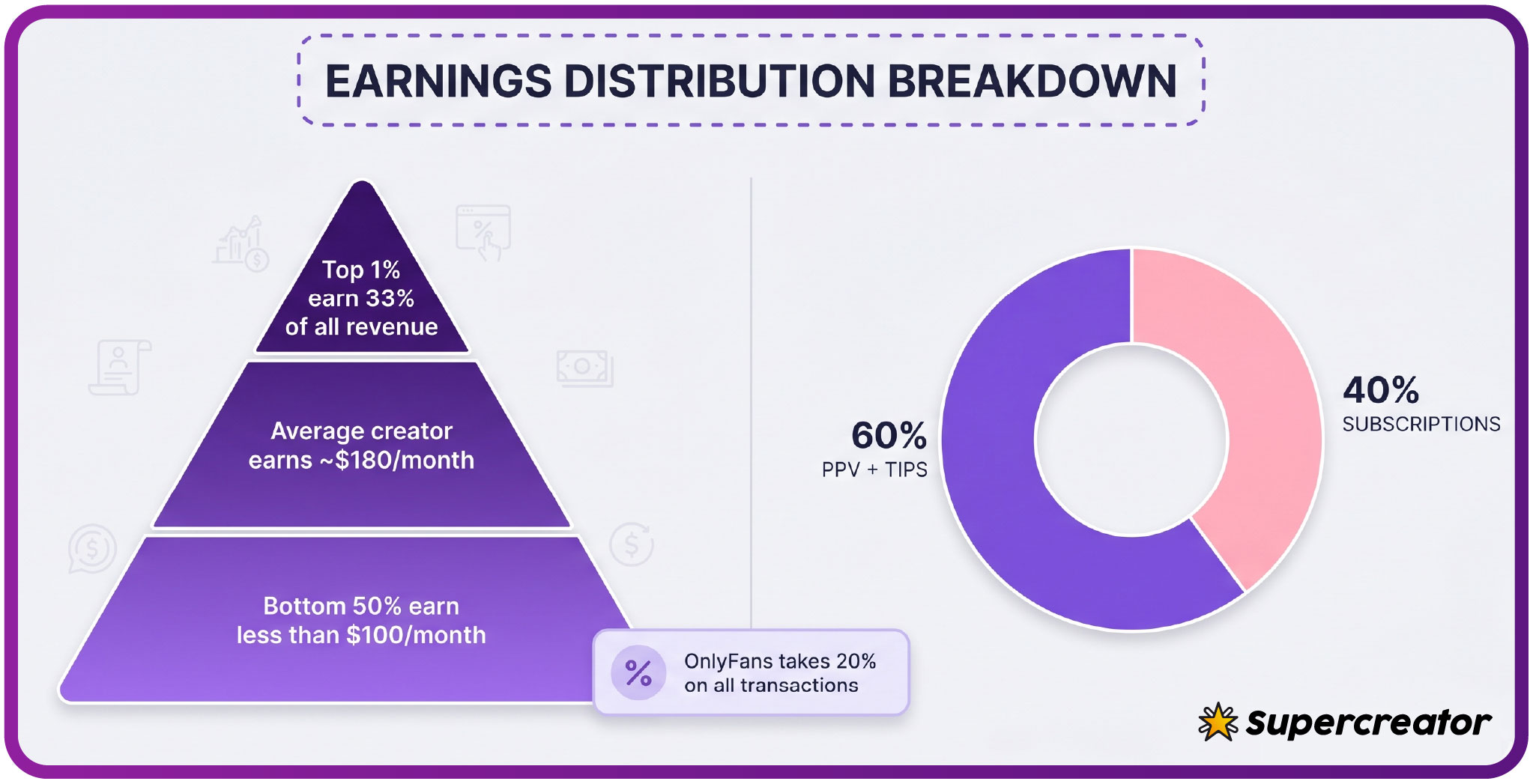
Platform fees sit outside the subscriber’s view but shape creator behaviour. OnlyFans takes 20% of everything, including subscriptions, tips, and pay-per-view, and the creator keeps 80%. That means creators are motivated to send frequent, well-timed offers, because each message has a direct financial return.
Types of Alerts You Can Receive
Notifications are not one thing. Different alert types carry different pressure, and separating them is the first step toward controlling spending. Some are purely informational, while others exist mainly to prompt a purchase. Knowing the category tells you how much caution the alert deserves.
The main categories behave like this.
- New message alerts: often the delivery method for pay-per-view content and limited offers.
- Promotion and discount alerts: usually time-limited and the most likely to trigger an unplanned unlock.
- Subscription renewal reminders: informational, but a prompt to reconsider whether the page still earns its place.
- Live or posting activity alerts: low direct cost, but they pull you back into the app where spending happens.
- Comment and reply alerts: conversational, rarely priced, but they keep the session open longer.
Message alerts are the category to watch most closely. A direct message can contain a paid unlock, and the price is not always visible until the app is open. That gap between the ping and the price is where unplanned spending lives.
Reading a Promo Ping Before You Tap
The wording of an alert often signals the cost behind it. Vague urgency usually hides a pay-per-view unlock, while clear language about a discount tends to map to a subscription change. Learning the pattern lets you decide before the app is open.
The table below maps common phrasing to the likely cost behind it.
| Alert phrasing | Likely cost behind it |
| “Something new just for you” | Pay-per-view unlock, often $5 to $15 |
| “Last chance” or countdown wording | Time-limited promotion, possibly an unlock bundle |
| “Renewal coming up” | Standard subscription renewal at the page’s listed price |
| “Thanks for being here” | Often a tip request, typically small and voluntary |
| “Check your messages” | Unknown until opened, treat as a possible paid unlock |
None of this is hidden or deceptive on its own. The point is that a short alert rarely carries the price, so the tap happens before the cost registers. Slowing that sequence is the whole game.
If you follow creators on other platforms, offers sometimes appear there first. A useful reference for wording and timing is this guide to best onlyfans hashtags for twitter, which shows how promotion language crosses between platforms.
Muting Versus Unfollowing
These two actions are often confused, and the difference matters. Muting notifications stops the pings while your subscription continues, so access and billing carry on as before. Unfollowing ends the subscription itself, and access stops when the current paid period finishes. For a starting point, best onlyfans hashtags for twitter collects free pages.
There is a related mechanic worth knowing. When a creator raises the subscription price, auto-renew stops automatically, and existing access lasts until the current paid period ends. That gives you a natural decision point without any action on your part.
Avoid these common mistakes when tidying up your alerts.
- Muting an account and assuming the subscription was cancelled.
- Unfollowing when you only wanted fewer pings, then losing access you had paid for.
- Leaving renewal reminders on for pages you already decided to drop.
- Muting everything at once, then losing track of which pages still bill you.
Setting a Cooling-Off Habit
Willpower is unreliable when a ping lands mid-scroll. A written rule works better because it removes the decision from the moment. The goal is not to stop spending entirely, but to make each purchase a choice rather than a reflex.
Simple personal rules that hold up in practice:
- Wait ten minutes after any promotional alert before opening the app.
- Check your monthly total before unlocking anything new.
- Decide a monthly cap in advance and stop when it is reached.
- Only unlock content you would still want tomorrow.
- Review subscriptions on the same day each month.
Ranking sites such as BestOnlyFans exist because the platform offers no discovery feed, so subscribers rely on outside lists to find pages. That same lack of discovery is why notifications carry so much weight once you have subscribed.

Notifications on Shared or Work Devices
Alerts on a lock screen are visible to anyone nearby, including colleagues and family. The content of a message preview is usually enough to reveal what the app is and what you subscribe to. That exposure is a privacy issue separate from spending, but it is solved with the same settings.
Risks to consider on a shared or work device:
- Message previews appearing on a visible lock screen.
- Badge counts revealing how many accounts you follow.
- Renewal reminders showing amounts and creator names.
- Shared notification centres keeping a scrollable history.
Routing alerts to a personal device, or disabling previews entirely, removes most of the exposure. In-app notification settings and your phone’s own notification controls both need checking, because they operate independently.
Account security settings are part of the same picture. Two-step authentication and a review of active sessions reduce the chance that a shared device keeps access you did not intend to leave open.
Rebuilding a Quieter OnlyFans Feed
Once you know which alerts cost you money and which do not, the feed can be rebuilt deliberately. The aim is a small number of loud accounts you genuinely follow, and a larger group kept quiet or removed. This is easier than deleting everything and starting over.
Use this table to sort accounts by how much attention they deserve.
| Account type | Recommended setting |
| Pages you check weekly and still enjoy | Keep notifications on |
| Pages you like but rarely open | Mute pings, keep the subscription |
| Pages that mainly send promotions | Mute pings and review at renewal |
| Pages you cannot remember subscribing to | Unfollow and let access lapse |
| Pages you subscribed to for one offer | Unfollow after the first month |
Free pages fit into this too. A free page is simply a subscription priced at $0, and the creator earns through pay-per-view messages and tips instead. That model relies even more heavily on alerts, because there is no subscription charge to fall back on.
Muting a page does not reduce the number of accounts you follow, so keep a short written list of what still bills you. BestOnlyFans-style directories are useful for finding pages, but only your own records tell you what you are actually paying for.
Tracking Spending After Muting
Muting only helps if the monthly total actually falls. That needs a short verification habit, ideally on the same day each month, using your payment history rather than memory. A few minutes of checking is enough to confirm the change worked.
These checks are quick and cover the usual leaks.
- Compare this month’s total to last month’s total.
- Count active subscriptions and confirm each one is intentional.
- Check pay-per-view unlocks separately from subscriptions.
- Add up tips, which are easy to forget because they feel small.
- Confirm no muted page is still renewing unnoticed.
If the total has not dropped, the cause is usually pay-per-view rather than subscriptions. That points back to message alerts, which carry most paid unlocks. Silence those first and the numbers tend to follow. BestOnlyFans refreshes its rankings every month.
FAQ
Does muting notifications cancel my subscription?
No. Muting stops the alerts only, and your subscription continues to renew at the listed price until you unfollow.
What is the cheapest a paid subscription can be?
The minimum is $4.99, and only promotional first months may fall below that. Typical paid pages sit between $4.99 and $15, averaging $5 to $10.
How much of my payment does the creator keep?
The creator keeps 80%. OnlyFans takes a 20% platform fee on subscriptions, tips, and pay-per-view.
Why do I get so many promotional messages?
There is no built-in discovery feed or directory, so messaging is the main way creators reach subscribers and prompt purchases.